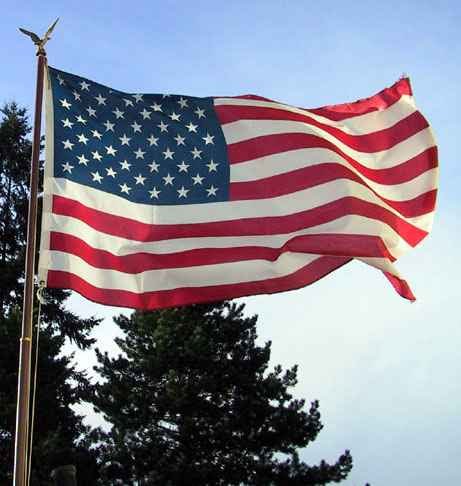
(I have been absent from my blog since May 19 because Debbie and I have been on a sixteen day road trip through America. We traveled from Florida through Texas to Arizona, Utah, Wyoming, Nebraska, Missouri, to points in-between and then back home. This is our journal.)
Day 1: May 19 – To
Gulfport, Mississippi:

The primary mission today was to get out of Florida. We left
home and took the Florida Turnpike north to Interstate 10. Then we headed west,
passing Tallahassee, Panama City, and Pensacola. We drove through downtown
Mobile, Alabama, passing Mobile Bay. We reached our first day’s destination of
Gulfport, Mississippi and stayed at a Fairfield Inn because I had made a
reservation via AAA. This would surely be one of our longest days. It took
eight hours and 54 minutes (584 miles) to get to Gulfport.
Our budget is about $180 a day. I allowed for around $100 a
day for a hotel, $50 a day for gas, and $30 a day for food. Our 2012 Nissan
Versa is good on gas, but it is small. By loading up the trunk, we did cut the
mileage a bit.
Along with our luggage, I added an emergency kit to the
car’s trunk with supplies for unforeseen situations. We packed a large cooler
with bottled water, a few soft drinks, and some lunch meat for sandwiches. We
also purchased a full size spare tire and got the windows tinted to protect us
better from the desert heat. Yes, I did take my .45 and some spare ammo, just
in case we run into the Clanton gang or any Mexican bandidos. (As a retired law
enforcement officer who qualifies at the range every year, I am authorized to
carry a concealed handgun anywhere in the United States.)
The overall goal is west to the Alamo in San Antonio, then
to El Paso, Texas. From there we will head to Tombstone, Arizona. (“You’re a
daisy if you do,” said Doc Holliday.) Then it’s the Grand Canyon, north through
Utah and a two-day stop somewhere in the area of Yellowstone National Park.
After that, we will head home, a cross-country journey of some four days.
Depending on money and time, we might stop at Mount Rushmore.
We briefly contemplated a change of course in Gulfport, and we
thought about going straight to Yellowstone. This would have taken us up
Interstate 35 through the Oklahoma City area. Had we done so, we would have
been in the area of the huge F5 tornado that struck there on May 20. There had
already been bad weather and a couple of tornadoes in that area, so we decided
to stick with our original plan to head west.
How lucky we were to make that decision.
Day 2: May 20 – To
Katy, Texas:


We drove from Gulfport, Mississippi past New Orleans and crossed the not-very-clear
Mississippi River at Baton Rouge, Louisiana. We could see a busy river
community with barges and a couple of fancy riverboats. After Baton Rouge, we
spent a lot of time on a very long, long bridge through the wetlands and swamps
of Louisiana before finally crossing into Texas.
We got to Houston just before rush hour, but it was still a
busy place. We had made our reservation at a Comfort Suites in Katy, Texas,
just west of Houston. Before we arrived,
we noticed that our car’s air conditioning was having a problem. It was not
cooling well and sometimes it stopped blowing cold air altogether.
After we checked into the hotel, I found a Nissan dealer
only two miles from the hotel. I arranged to bring the car in the next morning.
Then we ate at a Kentucky Fried Chicken and hit the rack. Before we fell asleep
we watched the terrible news about the tornado that destroyed much of Moore,
Oklahoma, killing 24 people including several children. We were glad we did not
have to witness this horrible tragedy.
Day 3: May 21 –
Still in Katy, Texas:
I was first in line at 6:30 AM at the Autonation
Nissan. They drove me back to the hotel in their courtesy van. A couple of
hours later, they called me and said that a part needed to be ordered. They
would have it overnighted, but we would have to stay until tomorrow. We were
not happy, but there’s nothing we can do. We have to have AC for the trip over
the desert to El Paso and beyond. Since we had to walk everywhere, we ate at
Kentucky Fried Chicken again.
Day 4: May 22 – To
The Alamo and then to Kerrville, Texas:

Debbie in front of the Alamo.
The driving is long, but the benefit is that Debbie and I
are seeing the United States one mile at a time. It had been about nine hours
to Gulfport and a comparable distance to Katy, Texas.
Our big goal for today was to see the Alamo in San Antonio,
Texas. We made it in about two and a half hours. As soon as we got into San
Antonio, we were caught in a massive traffic jam. A lot of people live in that
city, and all of them appeared to be in traffic with us.
It was a sobering experience to stand inside the remarkable
Alamo knowing that we were walking in the steps of Davy Crockett and the others
who made a fatal stand for Texas independence against the Mexican Army. I tried to picture a couple hundred Texans
fighting thousands of Mexicans to the death. These brave men held out until the
very end, knowing that their efforts would be in vain and that they would all
perish.
There is no admission charge at the Alamo, although parking
up the street cost ten dollars. We spoke with a lady who belongs to the
Daughters of the Alamo, the group who protects the heritage of that great
shrine. When I told her I was distantly related to Davy Crockett, she gave me
an information sheet for relatives. I’ll check it out better when we get home.
Then it was west again on I-10. We drove another three and a
half hours before stopping at a Hampton Inn in Kerrville, Texas.
This was a very pretty little town on the Guadalupe River.
We had dinner at a Cracker Barrel near the hotel and got another well-deserved
night of rest.
Day 5: May 23 – To
El Paso, Texas:

In the windswept desert west of El Paso, Texas
The drive to El Paso was six hours and 38 minutes. We had the opportunity to see how the terrain
changed from San Antonio to the west. We finally saw more mountains, more desert, and
very windy conditions. We could see a bad storm far off into the desert and the
beginnings of a funnel cloud. The tragedy in Oklahoma was very present in our
minds. Debbie filmed a few dust devils and some of the desert terrain. Then we
hit the edge of a storm and were pelted with hailstones the size quarters. After
we got to the hotel, it did not appear there was any damage to the car.
At one of the rest stops, I spoke with a guy wearing a
Vietnam veteran hat. He had a duffel bag with him, and he was obviously a
transient. We compared tours, and he told me his year in Vietnam was the only
time in his life that he ever did anything important. It was hard to see this guy
who was my age and know that he had done all he would ever do in life. He would
spend the rest of that life walking the roads of America with that duffel bag.
It’s difficult to see how Vietnam changed some of the men in my generation.
Some of us could never move beyond the war; others of us placed the memories in
the back of our minds and moved on. I always said that you should use the
experiences of war to make you a better man, not a worse man. I gave the old transient
the “warriors never give up” speech before wishing him good luck, telling him
“welcome home” and driving off. I thought about offering him some money, but we
had enjoyed a short conversation as “peers.” I didn’t want to insult him by
letting him think I felt sorry for him.
We stopped on the west side of El Paso and checked into a
Springhill Suites Hotel. I spent time in El Paso when we were training soldiers
at Fort Bliss. It is an interesting town, but we have both decided that as
pretty as the desert can be, it does not appeal to us as a place we would want
to live.
Tomorrow the objective is Tombstone, Arizona, former playground
of Wyatt Earp, Doc Holliday, Johnny Ringo, and the other unique characters from
the turbulent 1880s.
I’m your huckleberry….
Day 6: May 24 – To
Tombstone, Arizona:

The original Bird Cage Theater in Tombstone, Arizona
The drive from El Paso to Tombstone was an education in
deserts. When we crossed from Texas into New Mexico, we noticed that there was
more greenery and that there were a lot of pecan orchards. In one area there
were vast orchards; and then they were gone and it was desert again.
The mountains were beautiful but stark. In the distance it
was possible to see green crops growing in the vicinity of the Rio Grande
River. Then it was gone and we drove on through the hills and the mountains,
many of them red with age, strewn with boulders, and looking as though they
wanted nothing to do with mankind. The unlimited expanse of sand was
inhospitable, dry, windy, and able to kill you if you dared to enter a
waterless world filling miles of a dusty, lonely, hellish environment. I was hoping we could
see a coyote or a jackrabbit for Debbie but no such luck. (The only ones we saw were dead ones that had been hit by cars.) We stopped at one
rest area and the signs warned everyone to be on the lookout for rattlesnakes. Debbie
was uncertain about this and used me to guide her to the ladies room. We peered inside, didn’t see any of the
horrible vipers, and she entered alone, defeating her fear a foot at a time.
(She was terrified….)
We finally approached our turnoff in Benson, Arizona. It was
another twenty miles or so to Tombstone, but we made it to Allen Street in the
old frontier section of town. The Tombstone Epitaph office, the Bird Cage
Theater, the O.K. Corral, and many other famous locations were hit one at a
time. We watched the gunfight re-enactment next to the O.K. Corral. Then we
bought a few souvenirs for the kids and grandkids. A walk down Allen Street
past the Oriental Saloon was followed by dinner at the Longhorn Restaurant. The
town was filled with men and women dressed as old time westerners. Stage
coaches traveled back and forth through town, and everyone we met was friendly,
helpful, and courteous.

The local Tombstone stage gets ready to depart.
The most interesting thing we saw was the walking tour of
the Bird Cage Theater. It is one of the few buildings in the town that have
remained unchanged. The bar inside the front lobby is the same one that Wyatt
Earp, Doc Holliday, Johnny Ringo and the Clantons stood in front of. The
mirrors over the bar are the same ones they looked into. Inside the theater
itself, one can imagine the performers on the stage and the patrons looking on
from the boxes that lined the second floor.
In the basement of the theater are the same rooms in which
prostitutes entertained their customers. One room is known as the place where
Wyatt Earp and Josie Marcus began their love affair. Next to the rooms is the
poker area with a small bar and two tables. It was here that Earp, Holliday and
others engaged in their poker games.

The original gambling area in the basement of the Bird Cage Theater
In the theater itself, the piano in front of the stage is
the very same piano in use during the Earp and Clanton period. To the left of
the stage is a faro table used by Doc Holliday. It was between the faro table
and the piano that Holiday had one of his encounters with Johnny Ringo.
We ran into one couple who recommended the Landmark Lookout
Lodge just south of Tombstone about a half mile and almost across the street from Boot Hill - yeah, the cemetery where all the old cowboys (good and bad) are buried. It is supposedly haunted, so
we registered there. We were given room 213 (the same room we had in El Paso.)
We will let you know tomorrow if we are haunted tonight.
It is 7:21 PM and Debbie is already dozing off back at the
room. It was hotter than Hades in Tombstone. I made her drink a lot of water
while we walked around town, but it was even hot for this old soldier.
Tomorrow it is on to Flagstaff, Arizona, but not before we
make a quick stop at the Tombstone Boot Hill cemetery. It is supposedly haunted
as well…

Across Fremont Street
from the O.K Corral and Fly’s Photography
Day 7: May 25 - To Williams,
Arizona near the Grand Canyon:

Our "haunted" hotel in Tombstone, Arizona
Last night about 10 PM, Debbie woke me up out of a deep
sleep. She was sleeping alone in one of the two beds, and she said someone
(“something”) had just put an arm over her. She thought it was me at first, but
then she saw me in the other bed. She had an immediate chill and tried to call
out to me but she couldn’t speak. She finally could speak enough to wake me up,
and the incident ended. She vows she had been awake since getting up briefly at
9:41 PM. Guess the Landmark Lookout Lodge IS haunted.
But that is not all. Before we went to bed, we noticed three
large fingerprints on the long mirror at the end of her bed. She got a tissue
and wiped them off the mirror. When we woke up again, there were two fresh
large fingerprints. Fortunately, whoever
shared the room with us was friendly. (They sure liked Debbie….) Our hotel was
across the road from the original Boot Hill Cemetery with all the famous outlaw
graves like Billy Clanton, the McLaury’s, and off course Les Moore (below). We visited Boot
Hill before leaving town.


We left Tombstone and headed north, with the objective being
Williams, Arizona which is only about an hour from the Grand Canyon. We had
barely left Tombstone on a small, two-lane country road when we hit a Border
Patrol checkpoint. This was the second time this has happened. The border
patrol officer asked me if we were U.S. citizens. I replied that we were and
that I am a retired police officer. Once he saw the badge and ID, he thanked me
and motioned for us to drive on.
There has been some controversy from some those on the
extreme right about the validity of these checkpoints. There have even been
videos posted where the drivers refuse to answer any questions because they
don’t feel the Border Patrol has a right to just stop people to check
citizenship. While I understand how this could someday get out of control (“Let
me see your papers,” said the man from the Gestapo), we were only a few miles
from the border. These guys were just doing their jobs. They were polite, and I
saw nothing wrong with it. Now, if it became routine throughout all of America,
then I might begin to have a problem. If they tried to search me or my vehicle
without probable cause, then there would be a problem with that.
This day would be one of the longest from a driving
standpoint. We picked up I-10 west before taking I-17 north. We drove through
Tucson and then Phoenix. Just outside Phoenix, we found ourselves in a massive
traffic jam because of an accident. We lost almost an hour waiting in traffic.
There had been a fatal motorcycle accident.
After the traffic finally started moving, we headed north
again on I-17. We began looking for a rest area because we both had to use the
“facilities.” Well, sure enough, right at the exit for the rest area there was
another major accident that closed the entrance to the rest area. We were in
another major traffic jam. This one didn’t last quite as long, but now we both
REALLY needed a bathroom.
The next exit was Black Canyon City. A sign said there was a
Pecos Bill’s Pizza place so we turned off. There was no pizza place. Now I was
getting desperate. For a mile or so, we followed this desert road before I had
to turn off in an area of small homes and mobile homes that were each sitting
on about an acre of desert. Finally, I could wait no longer and just stopped
next to a cactus. I relieved myself (although I was sure someone was calling
the police to report an old man urinating in his cactus garden.)
Then it was back to I-17 through a winding trail of paved
and unpaved roads. We were finally heading north again, but now Debbie was
getting desperate. The next exit had some restaurants and gas stations, so we
pulled off on Highway 69.
I dropped Debbie off at the front of a Subway that was part
of the gas station. We noticed that almost everyone who had been caught in the
traffic jam was either getting gas, trying to eat, or going to the bathroom.
After I parked, I went inside and saw my poor wife at the end of a line to the
ladies’ room of some 20 women, all of them shifting their feet and looking
desperate. The men’s room had no line.
After she finally completed her business, we didn’t even
wait to eat or fill up. We left I-17 which has now become the most
accident-prone highway in the entire west (at least to us.) We drove north on
Highway 69. This turned out to be a pleasant journey, taking us into Prescott
Valley, a lovely town with trees on the mountains, shopping, and an open, clean
appearance. When we reached the town of Prescott about seven miles later, we
turned right on Highway 89 and drove north to Interstate 40. From there we went
east to Williams, Arizona and our home for the night at the Mountain Ranch
Resort at Beacon Hill.
Mountain Ranch Resort is a beautiful place, looking out on
mountains that have some trees and a little snow left over at the top. Debbie
made friends with a small rabbit in the courtyard, and we had a terrific dinner
in the restaurant. The whole place has the look of a mountain lodge.
Tomorrow morning (well, it’s 4:17 AM of the 26th
as I write this), we will have breakfast here, then pack up, check out and
drive to the Grand Canyon. From there we will head north once again (as we
drive around the Grand Canyon – not through it or over it) until we arrive in
Kanab, Utah for the night. Because of the Memorial Day weekend, we have
reservations again.
Day 8: May 26 - To the
Grand Canyon and Kanab, Utah:

At the Grand Canyon
After a nice breakfast at the Mountain Ranch Resort
restaurant, we got an early start for our visit to the Grand Canyon. We had
read about how long the entrance line could be, but there was no line at all.
Because I am now officially an elderly person, I bought a $10 senior pass which
got me, Debbie and the car into the park. The pass is good at any national park
for the rest of my life.
We stopped at the visitor center before walking a short path
to the canyon. It was a breathtaking sight. We spent about an hour there before
stopping at the small store near the visitor center. The entire event took
about an hour and a half.
The overland journey to Kanab, Utah began as we drove east
on Highway 64. It took a long time to traverse the winding road that followed
the south rim of the canyon. Eventually, we made it to Highway 89 and turned
north. We stopped briefly at a Navajo-run station to gas up the car. The trees
on the sides of the mountains disappeared, and the stark, treeless desert
returned.
We were passing through the Navajo Indian Reservation. For
many miles, the only buildings or mobile homes we saw were those of extremely
poor people. Many of them were very small, probably one room, and a lot of them
looked like they were about to collapse. The terrain was part of the “Painted
Desert” with beautiful mountains striped with gray, red, and lavender-colored
sands.
Eventually, the buildings disappeared, and we were driving
through the vast emptiness of the desert. When we crossed streams or rivers,
they were dry as a bone. The vistas were spectacular but foreboding. You knew
that survival in such intense environments would be difficult if not
impossible.
At one point, highway 89 became blocked off for an unknown
reason. We were forced to take Alternate 89 off to the northwest. All of the
roads so far had been only two-lane strips of pavement. 89 A was also a
two-lane road, but it was not as well-constructed.
We had our GPS, but the crazy broad’s voice told us to turn
right onto House Rock Road. When we reached it, we saw that it was a dirt road
that led out into some dry canyon. We stayed on 89 A, but realized that there
might have been someone who would have followed the GPS instructions. If they
had done so, then their bodies would have been found a few years from now in
some dry gulch with empty water bottles strewn all around their skeletons.
A few miles later, the GPS woman told us to turn right
again, this time on National Forest road 247. Once again, this might have
worked if we were hunters traveling into the deep woods, but for an old Florida
couple headed to Utah, the end result might not have gone well. Once again, I
ignored the GPS and stayed on 89 A. The road had to meander over and around
canyons, boulders, dry creeks, and near the edges of many cliffs. Debbie did
not like that part. The far-off mountains were a fiery red and the scenery took
your breath away. Finally, we reached the border of Arizona and Utah. A couple
of miles later, we enter Kanab, Utah and our hotel for the night at a Days Inn
and Suites.
This was our shot-in-the-dark hotel reservation to make sure
we had a place to stay on Sunday night of Memorial Day weekend. When we checked
in, the clerk had a problem at first because they had been over-booked with a
couple of bus tours. At first we were not sure we would have a room, but he
worked it out and the room is fine. We had dinner across the street at the
Sunset Bar and Grill. It was a nice place getting ready for a live band at 7
PM. Our room was about a hundred yards away, so I worried about possible noise
but there wasn’t enough to keep me from sleeping like a rock. Fell asleep at
about 8:15 PM (yeah, I’m old and I drove a long way), but I am up at 3 AM
writing this.
We will travel tomorrow to Spanish Fork, Utah, to visit
Karen and Michael Ferguson for the night. We had planned to drive to
Yellowstone National Park, but unfortunately there are no rooms available in
the park. The nearest rooms are at least 50 miles away, and it takes a long
time to travel around inside the park – hours and hours. Right now we aren’t
sure we will hit Yellowstone. We may save that for a special week all by itself
at a later date. I am going to revisit all the post-Spanish Fork plans right
now.
Day 9: May 27 - To Spanish
Fork, Utah:

Debbie with our friends Karen and Michael Ferguson in Spanish Fork,
Utah
Driving from Kanab, Utah, to Spanish Fork, Utah was not long
in the driving sense (only about four hours and ten minutes), but the roads
were two lanes most of the way (highway 89), and we drove through some neat
little towns (Glendale, Alton, Hatch, and Panguitch). The Bryce Canyon National
Park was off to the east as was a nice little river called the Sevier River. We
passed farms and ranches that were picturesque and the ride was relaxing. We
took highway 20 west and got on Interstate 15 north.
This route took us to Spanish Fork, Utah, where our friends,
Michael and Karen Ferguson invited us to spend the night. Their home overlooks
a beautiful mountain range and a golf course. Karen showed us around the area,
and we met Michael at a Red Robin Restaurant for dinner.
After a relaxing evening, it was time to finalize our plans
for the next couple of days. We will go to Yellowstone. The reservation was set for Colter Bay Village in
the Grand Teton National Forest. It is only a few miles from Yellowstone. We will stay in a cabin on the night of the
28th, and then see what we can of Yellowstone before moving on to
Cody, Wyoming for the night.
I am looking forward to seeing Yellowstone. It has been
about 50 years since I was there. I participated in a YMCA camping trip called
the Caravan Camp in the mid-sixties. One of our stops was Yellowstone, and the
experience is still fresh in my mind in many ways. I look forward to sharing
this with Debbie who will be seeing this national park for the first time.
Day 10: May 28 - To Grand
Teton National Park and Colter Bay Village:

The Snake River in Wyoming on a rainy day, but it was still beautiful.
This leg of our journey began as we gassed up the Nissan in
Spanish Fork, loaded up the ice chest, and rubbed the sleep from
our eyes. We left town by 8 AM on Interstate 15, but quickly left that highway
and moved onto smaller roads. We wound our way around mountains and through
valleys, eventually entering Wyoming. Then the road took us back into Utah.
Eventually, we would cut the corner of Idaho before re-entering Wyoming.
Other than the spectacular scenery, the biggest memory of
this day will be the rain. It started to rain almost from the moment we left
and never stopped until after we had settled into our cabin at Colter Bay.
The route in Wyoming was highway 89, and it took us through
some beautiful towns (Afton, Alpine, and finally, Jackson Hole).
After we left Jackson Hole, there was no doubt that the
massive Teton Range was off to the west. It was unfortunate that the rain clouds
obscured the peaks, but they were impressive nonetheless.
Finally, we arrived at Colter Bay Cabins and were introduced
to cabin 610. It is a one-room authentic log cabin about 18 by 30 feet in size.
Although they have added a bathroom, there is no television, no internet, no
air conditioning, and no refrigerator. There is a small wall heater which is
great since it is supposed to go down to the mid-thirties tonight.
It looks like the weather is going to be about the same
tomorrow while we visit Yellowstone. No problem. Old Faithful will still spout
off, the hot springs will still be hot, and the waterfalls will still flow.
Hopefully we will also see a few bears and other animals to make the day a
memorable one. We will take as much video and still photos as possible.

In front of our small, one-room log cabin
in the Grand Teton National Park
Day 11: May 29 - To
Yellowstone National Park and Cody, Wyoming:

We made it! At the entrance to Yellowstone
We were up early for breakfast at the restaurant at Colter
Bay Village. Then it was off to Yellowstone. It took less than an hour to reach
the front gate on the south side of Yellowstone where my senior pass from the
Grand Canyon got us in for free.
We had a plan for our day-long visit. We planned to travel
one big circle starting with Old Faithful. We would end up leaving the park on
the east end. We would spend the night in Cody, Wyoming (named for Buffalo Bill
Cody).
We saw Old Faithful and ate lunch at the Inn that overlooks
that famous geyser and its related hot springs. As we headed north, we saw our
first buffalo, a species that was hunted to the brink of extinction in the 19th
century. In fact, we would see, photograph, and film quite a few buffalo.

A piece of Americana in the flesh - one of Yellowstone's buffaloes
We also managed to see a small group of caribou and finally got a great view of a
grizzly bear feeding on a kill about a hundred yards from the road. We couldn't stop because tourists had filled the roadside, but Debbie managed to get some of the bear on video. I wanted to
see a moose, but we never did.


At Old Faithful
We stopped at the souvenir shop at the Old Faithful Inn and
bought the place out for the kids and grandkids.


At one of Yellowstone's beautiful waterfalls
Before we crashed, we discovered that the weather in the
Midwest is so bad that Mount Rushmore National Park has a flood warning and a
flood watch for the next couple of days. We were warned by the Fergusons who
experienced Mount Rushmore on a day where the clouds obscured the monument. We
are afraid that this is what will happen if we try to see it tomorrow. So, in a
disappointing decision, we will probably forego Mount Rushmore this trip and
drive to Cheyenne, Wyoming tomorrow. Then it will be a cross country drive of
four days to get home. The biggest trick will be to try and go behind or around
the severe weather which is threatening tornadoes, hail, and lots of rain.
It is now 4 AM. Since I went to bed too early, I can’t sleep
any more. I’ll take another look at the weather before we make an irreversible
travel decision.
Day 12: May 30 - To
Cheyenne, Wyoming:

A view of the Wind River Canyon between Thermopolis and Shoshoni,
Wyoming
We left Cody, Wyoming early and headed out to Cheyenne. We
would travel from the far northwest part of Wyoming all the way down to the far
southeast corner. It was a long journey of over six hours marked by a few
showers and a lot of high winds. The car was buffeted by wind almost the entire
journey. We managed to see a few deer and some bighorn sheep.
I must say that I had forgotten how sparsely populated
Wyoming is. There are only about half a million people who reside in the state.
Almost all of the state seems to be wide open prairies and almost bare
mountains. You cannot drive through this state without acquiring a tremendous
respect for the men and women who survived the harsh elements, the hostile
Indians, and the day-to-day struggle just to survive.
We eventually arrived in Cheyenne and are staying at a Springhill Suites hotel. We have decided to move on to Lincoln, Nebraska for the next leg of our trip. We are trying to stay behind the terrible weather that ended our trip to Mount Rushmore and threatens to damage Oklahoma and surrounding areas once more.
We eventually arrived in Cheyenne and are staying at a Springhill Suites hotel. We have decided to move on to Lincoln, Nebraska for the next leg of our trip. We are trying to stay behind the terrible weather that ended our trip to Mount Rushmore and threatens to damage Oklahoma and surrounding areas once more.
Day 13: May 31 - To
Lincoln, Nebraska:


It was a tough decision, but the weather at Mount Rushmore
is going to be too unpleasant to try to travel there. We decided to begin the
final leg of our journey by trying to avoid the severe weather in the Oklahoma
City/St. Louis areas. The fastest route home would be from Lincoln, Nebraska to
St. Louis to Nashville, Tennessee and beyond. However, the Missouri and
Mississippi Rivers meet up in St. Louis and they are at flood stage. A long
line of severe weather (including the possibility of more tornadoes) from Texas
up to Illinois make it difficult to find a safe path south and across the
Mississippi.
The trip from Cheyenne to Lincoln was a very long and
uneventful one. The unbelievable high winds in Wyoming continued into Nebraska,
but the sun was shining and we encountered no bad weather. The mountains faded away, and we entered America’s
heartland. Wide plains, farmland as far as the eye could see, and it went on
like this all the way to Lincoln.
After dinner at an International House of Pancakes, we
returned to our room. There we learned of the tornadoes approaching the Oklahoma
City area, just to our south. Before the night was over, it was estimated that
five people had been killed (the death toll would be much greater in the end), including a mother and her baby. The storms
continued on to St. Louis.
I have tentatively planned to head south to Joplin,
Missouri. This will keep up just north of the severe weather, although we might
see some rain. I don’t want to get stranded somewhere in rush hour (which is
how some of the people died last night) nor do I want to take a chance that we
might get stuck in a flood in St. Louis.
The Weather Channel indicates that the weather in Joplin
will be okay. Then the next day I would like to get to Memphis. It appears the
weather may clear by then in the town of Elvis’s Graceland. But we will need to
revisit all of this tonight in Joplin.
We are ready to get home. It has been a long, rewarding
journey, but it’s time to get back.
After all, we have to start planning for the next trip
to…..wherever!
Day 14: June 1 - To Joplin,
Missouri:

The trip from Lincoln, Nebraska to Joplin, Missouri was quiet
and uneventful. After the second
terrible tornado event in the Oklahoma City area, we watched the clouds in the
distance, and we even noticed some flooded fields and one flooded road. We have
no choice but to try and thread our way back to Florida. There are still flood
watches that will continue even when the severe weather has moved off to the
northeast.
Joplin has its own tragic past when it comes to tornadoes. An F5 tornado almost destroyed this city on May 22, 2011.
Joplin has its own tragic past when it comes to tornadoes. An F5 tornado almost destroyed this city on May 22, 2011.
Our path to Joplin takes us in between the Oklahoma area and
St. Louis. We are “threading the needle” trying to get through the damaged
areas and potential severe weather. We passed more farmland and the terrain
became a little more hilly and forested. Finally, after over six hours, we
arrived in Joplin and are staying once again at a Fairfield Inn. We always get
the government rate of $77 a night, and they have a really nice breakfast in
the morning.
After checking the weather, it looks like we will make our
way to Tupelo, Mississippi tomorrow. It is about eight hours away, but will put
us only about eleven hours from home. We do have to pass through Springfield,
Missouri which still has flood watches, but the weather is supposed to improve
today.
We are both tired and ready to get home. It has been fun,
but it’s time to get back to the real world. When it is all done, I will fine
tune and edit this journal for posterity and put together a little video of our
travels. Our budget has worked well, almost to the penny, so planning for a
future trip will be easier.
Now it’s on to Tupelo, birthplace of the king of rock and
roll, Elvis Presley. We will pass through Memphis, but I’m not sure we’ll have
time to see Graceland….
Day 15: June 2 - To Tupelo,
Mississippi:

The trip to Tupelo was right through the heart of America.
Farmlands, including some that were flooded from the severe weather, and also
some property damage – downed trees, a destroyed shed, flooded side roads.
We spent our last night in Elvis’s hometown. The Fairfield
Inn was conveniently located and we had a pleasant dinner at an Applebee’s. We
prepared for the final, long ride home of eleven hours and 34 minutes.
Then we crashed…..
Then we crashed…..
Day 16: June 3 - To the
House:

The last leg of our journey was long indeed. I drove for the
first six hours or so, then Debbie relieved me for about two hours. After a short
snooze and a rest stop, I finished the drive home. A little rain, but nothing
bad. We arrived home at about 7 PM. After unpacking, we had a snack, talked
about what a great adventure we had successfully completed, then hit the sack
early.
I slept for nine and a half hours straight, which is unheard
of for me. Debbie slept a little longer. Terrific trip, super adventures, but it's great to be home...
Day 17: June 4 - The End of the Trail:
Three days before we left home on the 19th of May, we made the last minute decision to take the road trip we had put off since I retired from the police department in 2010.
We were foolish to have put it off at all, because our family lives with the memory of my parents' unfulfilled travel plans. My mother died just three years before my father's scheduled retirement. They were never able to fulfill their dream trips. Debbie and I always said we would not let that happen to us, but the struggles of raising four kids put off our travels as well. God granted us the opportunity to retire together, so we must do what we can to enjoy our lives while we can. We know too many people our age who have died or who are in too poor health to make such a trip happen. We realized that this road trip would be the first time we had taken a two-week vacation in the entire forty years we have been together. All our other trips together or as a family had been a week or less.
We were foolish to have put it off at all, because our family lives with the memory of my parents' unfulfilled travel plans. My mother died just three years before my father's scheduled retirement. They were never able to fulfill their dream trips. Debbie and I always said we would not let that happen to us, but the struggles of raising four kids put off our travels as well. God granted us the opportunity to retire together, so we must do what we can to enjoy our lives while we can. We know too many people our age who have died or who are in too poor health to make such a trip happen. We realized that this road trip would be the first time we had taken a two-week vacation in the entire forty years we have been together. All our other trips together or as a family had been a week or less.
We traveled one big circle around the greatest country in the world. We watched palm trees and swamps in Florida, Alabama, and Mississippi turn into the deserts of Texas, New Mexico and Arizona. We got to stand in the Alamo, imagining what the heroes who died there had gone through. We stood in legendary Tombstone in the steps of Wyatt Earp, Doc Holliday, and Johnny Ringo. We saw those deserts give way to mountains and the gigantic Grand Canyon. We marveled as America turned into a splendid painting of the Teton Range of snow-capped mountains and the forested majesty that is Yellowstone National Park.
We witnessed the great buffalo, a ravenous grizzly bear, gentle caribou, and a variety of animals right down to the cute-as-a-button chipmunks. We drove through everything from stifling heat to cold winds, drizzly rain mixed with snow, and descended into spacious canyons with steep cliffs and flowing rivers. We crossed the paths of Lewis and Clark, the trails of the great mountain men like Jim Bridger,and the faded tracks of the wagon trains driven by adventurous, courageous Americans seeking a better life in the West and beyond.
We passed through the legendary towns of Cody, Wyoming (named after Buffalo Bill) and Cheyenne, Wyoming, a cattle empire city since the mid-1800s. We made our turn to the south through Lincoln, Nebraska and Joplin, Missouri. Twice during our trip, we had to avoid the terrible weather that resulted in the tragic tornadoes of Oklahoma. We made our way through the heart of America, gazing at cornfields that stretched as far as the eye could see, farms, ranches, forests, wide plains, grazing cattle, and peaceful rivers.
Everywhere we went, the people we met were friendly, courteous, and helpful. We made new acquaintances throughout the South, the West, and the Midwest.
As we relive our adventures from the "Great American Road Trip of 2013," we will continue to reflect on how fortunate we are to be Americans, living in a country of generous, loving people who have worked hard to build the greatest nation in the world.
I'm not worried about America's future at all. The people we met - like those who preceded them in history - will never allow their freedoms to be taken away.
After all, we are Americans.....
Charles M. Grist